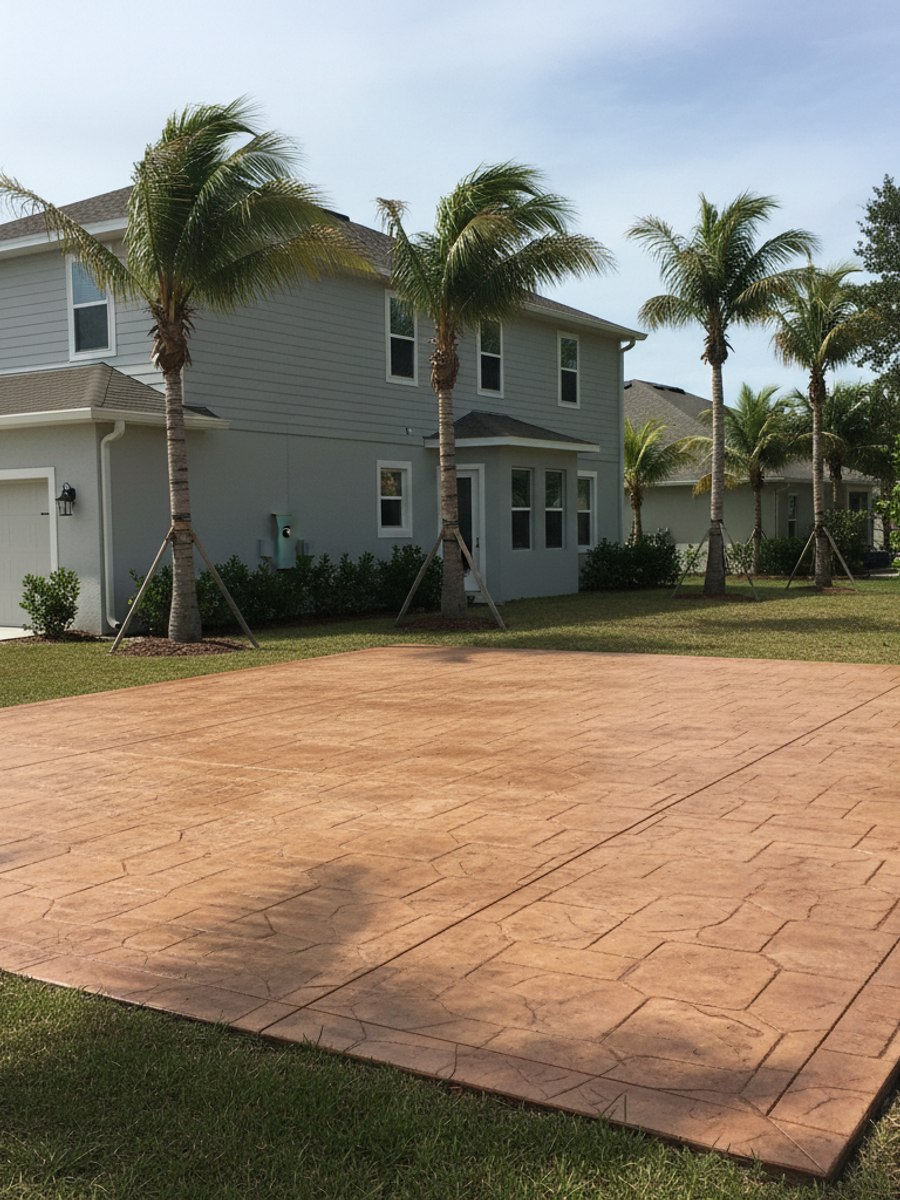
Concrete looks simple once it's poured. Flat, gray, done. What you can't see is the six inches under it, and that's where most of the problems that show up two years later actually start. If you're getting quotes for a driveway, a patio, or a pad to replace a cracked slab, here's what separates a contractor who knows Deltona's ground from one who's just good at pricing a job cheap.
Start with the license, but don't stop there
Florida concrete work generally needs either a state-certified general/building contractor license or a registered contractor license recognized by the local building department, depending on the scope. Ask for the license number and look it up yourself through the state's licensing search. It takes two minutes. Ask for proof of general liability insurance and workers' comp coverage too, not just a verbal "yeah we're covered." If a crew gets hurt on your property and the contractor has no comp policy, that liability can land on you as the homeowner.
A permit matters more here than people assume. Deltona and Volusia County both require permits for most new slabs, driveway replacements over a certain size, and pool decks, and inspections typically check the sub-base compaction and rebar or mesh placement before the pour, then the finished slab after. A contractor who tells you "we skip the permit to save you money" is telling you they'd rather you not have an inspector confirm the base was actually compacted. That's the part that fails.
What a real quote actually breaks down
A serious bid should tell you the slab thickness (4 inches is standard for driveways and patios, closer to 5-6 inches if it'll see a truck or an RV), whether they're using wire mesh or rebar, and what the base material is. Around here that base is usually compacted crushed limerock or a compacted sand fill, because most of Deltona's soil is sandy and drains fast, but sandy soil compacts differently than clay and a crew that's used to working clay-heavy ground up north can get it wrong down here. Ask what psi mix they're using. 3,000 psi is common for driveways in this climate; some contractors will push to 3,500 for anything that'll take heavier vehicle loads or sit near a pool where chemicals and moisture cycle through it constantly.
Also ask when they'll cut control joints. This should happen within 24 to 48 hours of the pour, not whenever the crew gets back around to it. Concrete is going to crack somewhere as it cures and shrinks. A control joint just tells it where to crack instead of leaving that up to chance down the middle of your driveway.
What Deltona's ground and weather actually do to a slab
Deltona sits on mostly sandy soil, which drains well compared to the clay soils you'd deal with further inland in the state, but a lot of the area was platted back in the 1960s by the Mackle Brothers as one of the biggest planned subdivisions in Florida, and some of those older lots near the lakes and wetland pockets have a higher water table than people expect. If your yard holds standing water after a storm, or you're near one of the retention ponds or canals that run through the older grid streets, that's worth telling your contractor before they price the job, not after.
Summer here means near-daily afternoon thunderstorms from June through September, and a fresh pour needs at least a few dry hours before rain to set up properly. A contractor working this area on a job with any real square footage should be watching the radar as closely as the finish trowel. Curing also matters more in our heat: concrete poured in July cures faster on the surface than it does deeper down, which is why a lot of crews will keep it damp or covered for the first few days rather than letting the sun flash-dry the top layer while the middle is still soft.
Hurricane season runs June through November, and it's part of why a driveway or pool deck poured with proper drainage slope, generally about a quarter inch of fall per foot away from the house, matters as much as the mix itself. A flat slab that pools water isn't just annoying, it accelerates spalling and, near a pool, algae growth on stamped or exposed aggregate finishes.
Red flags worth walking away from
- A bid that's dramatically lower than three others with no explanation. Somewhere they're cutting thickness, skipping rebar, or skimping on base compaction.
- Cash only, no written contract, no mention of a permit.
- Vague answers when you ask about control joints or psi rating. If they can't answer basic spec questions, they're not the ones pouring your slab, they're subbing it out.
- No local references or completed jobs they can point you to in the area, or job photos that are all stock images rather than actual work.
- Pressure to sign same-day. A patio or driveway is not an impulse purchase.
Neighborhood age changes the job
A lot of Deltona's older sections, the original platted lots from the 60s and 70s, have septic tanks and drain fields that the contractor needs to locate before any digging or demolition starts, since there's rarely a detailed as-built survey on file for a house that old. Newer subdivisions off Howland Boulevard or further out tend to have utility lines mapped more reliably, and some newer developments carry HOA rules about driveway finish or color that older neighborhoods simply don't have. Either way, a contractor should be calling 811 for utility locates before any concrete removal or new footing goes in. If they don't mention that step at all, ask why.
What to ask before you sign anything
Get the cure time in writing, not just the pour date. Most driveways need about 24 to 48 hours before you can walk on them and a full 7 days of curing before regular vehicle traffic, with full strength closer to 28 days. Ask who handles the permit application, whether that cost is in the quote or separate, and what happens if an inspection fails. Ask what the warranty covers, cracking specifically, since some hairline cracking is normal in concrete and not every crack is a defect.
None of this is complicated once you know what to ask. It just takes someone willing to answer plainly instead of talking around it. That's the kind of conversation we have with every homeower who calls about a driveway, a pool deck, or a slab that's already cracked and needs to be dealt with properly. You can see the kind of work and finishes we do at New Look Concrete.